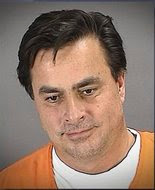
Amazing Clips and Pics of All-Time College pro, Tyrone Prothro.
http://www.youtube.com/watch?v=SzDWtxByxyg&hl=en
Friday, June 25, 2010

Thursday, May 27, 2010
Steve Young - USFL Pro Football Career & Brigham Young University (BYU) Cougars Football Career
Steve Young is a very accomplished athlete who has extended his relevance in the game football by making a career out of being a popular on air television personality for the ESPN network. While a younger generation of football fans may be most familiar with Young for his current work as a commentator on ESPN Monday Night Football post game shows fans old enough to remember his playing days know that he was truly something special on the gridiron. Long before Steve Young became a Super Bowl MVP in 1995 with the San Francisco 49ers of the NFL he was a prominent player for the Brigham Young University (BYU) Cougars and later a poster boy for the upstart USFL spearheaded by Donald Trump to compete with the NFL.
After being dubbed a high school athletic prodigy out of Greenwich High School in Greenwich, Connecticut Steve Young, a three sport star in high school (football, basketball, and baseball), moved across the country to continue his football career at Brigham Young University (BYU) in Provo, Utah. Young who was initially considered a run first and throw second type of quarterback worked hard to overcome his shortcomings at passing the ball. Young, who played quarterback for an option run style offense in high school, eventually made his weakness his strength to the point that by his senior season he set an NCAA single season record by completing 71.3% of his throws.
The First Team All-American quarterback at BYU led an explosive offense that thanks to efficient quarterback play established a new NCAA record for total offense as the squad averaged 584.2 yards per game while racking up an 11-1 record. Despite finishing second in the voting for the Heisman Trophy to running back Mike Rozier of Nebraska Steve Young did receive other noteworthy accolades including the Davey O'Brien Award given annually to the best quarterback. Young completed his college career in style by tossing the game winning touchdown in a Holiday Bowl win against the University of Missouri in 1983. The pass that gave BYU the 21-17 win was the tail end of a trick flea flicker play. Young would later be inducted into the College Football Hall of Fame in 2001.
The upstart USFL (United States Football League) was just getting off the ground when Young was prepared to turn pro in 1984. While the established NFL still seemed like the direction the game would head for the long term the USFL was successfully picking off star players to join their league and Steve Young was amongst the young talent that was lured by lucrative contracts to suit up for the less established brand. Young signed what was at the time considered an extremely lucrative deal in the form of a $40 million annuity contract in exchange for agreeing to play for the Los Angeles Express for ten years.
The career Steve Young had in the USFL was shorter than scheduled as a result of the owner of the team he played for going bankrupt in Young's second season. Financial debacles caused embarrassing lapses in the integrity of the league including bus drivers refusing to drive teams to games after paychecks bounced and players simply not showing up. Interestingly, due to the structure of the original contract that Steve Young agreed to he is still being paid from that original contract and will continue to be every year through 2027. Due to the annuity nature of the original $40 million contract Young was scheduled to be paid $1 million a year for 40 years. Even though the now defunct league officially shut down in 1986 litigation proved successful in eventually guaranteeing that Young be paid the annuity value he was promised.
Steve Young would go on to sign with an abysmal Tampa Bay Buccaneers team in the NFL and suffer a 3-16 record as a starter over two seasons before being traded to the San Francisco 49ers were he was mentored by the great Joe Montana while serving as his backup. Young went on to have a prolific NFL career despite wasted time in the USFL and with the Buccaneers. Looking back on the NFL success of Steve Young the two-time MVP who has the record for highest passing rating to go along with a Super Bowl ring is considered one of the top quarterbacks in the history of the game. In 2005 Young was inducted into the Pro Football Hall of Fame.
Sam, the man who penned this piece, is admittedly jealous of Steve Young who with an abundance of time and money on his hands spends some time on the golf course when he's not with his family which is comprised of his former model wife Barbara and their four children (two sons and two daughters). The appropriate go to golf accessory for someone like Steve Young is a BYU golf bag. If anyone should be proud to play eighteen holes with a Brigham Young University golf bag it should be Steve Young who is the great-great-great grandson of Brigham Young himself.
Sunday, May 9, 2010
Troy Polamalu - Ball Hawk
A Highlight Show of the Steelers Safety Troy Polamalu #43. Steelers 6time Superbowl Champ!!! Go Steelers! Enjoy the video.
http://www.youtube.com/watch?v=g7qrlWhXe8c&hl=en
http://www.youtube.com/watch?v=g7qrlWhXe8c&hl=en
Saturday, May 1, 2010
E 40, CHRIS BROWN, DJ QIUK & WEST COAST-PERFORMING @ PRO BOWL PARTY
E 40, CHRIS BROWN, DJ QIUK & WEST COAST-PERFORMING @ PRO BOWL PARTY AT LEVEL 4 IN WAIKIKI!!!!!!
http://www.youtube.com/watch?v=XG0WoDlrhTA&hl=en
http://www.youtube.com/watch?v=XG0WoDlrhTA&hl=en
Tuesday, April 20, 2010
Jehmu Greene on FOX America's Newsroom - Super Bowl ad
Jehmu appeared on Fox's America's Newsroom to discuss the Super Bowl ad controversy as we gear up for Sunday's game.
http://www.youtube.com/watch?v=Ln-NZBOXxZY&hl=en
http://www.youtube.com/watch?v=Ln-NZBOXxZY&hl=en
Monday, April 12, 2010
Aaron Massey #53 Jordan High School
Aaron Massey is son of former NFL and Pro Bowl participant Robert Massey. Aaron is #53 and played Offensive Tackle with the frame of a Linebacker. He was a late developer on the grid iron but has rapidly improved as a massive athlete over the past few years. He is very strong in the weight room and a terror on the wrestling mat. His brother, Robert Jr. played as a freshman at Livingstone college this past season and was named the Rookie of the Year in the CIAA conference. Robert Jr. had a career day against his dad's CIAA championship team, The Bears of Shaw University where he racked up 18 tackles, 2 sacks a few QB hurries and an interception for Six. Next up for Aaron Massey will be deciding on what University he will attend. Already knocking out the academics, he has put himself in position to participate as a freshman. This young man has a bright future ahead of himself.
http://www.youtube.com/watch?v=Ohq1PdKqoaE&hl=en
http://www.youtube.com/watch?v=Ohq1PdKqoaE&hl=en
Monday, March 29, 2010
Brawn Over Brains - Philip Rivers, LaDainian Tomlinson, and Toughness In Pro Sports
Picture this scenario: two secretaries get hired by a well-known law firm, and work there for several years. One (let's call him Phil) is somewhat of an underachiever, and is notorious for his surly attitude. The other (let's call him LT) represents the firm with class and dignity, and is the most efficient worker they've ever had. One day, they both come down with injuries while typing. Phil has a torn ligament in his wrist, while LT is in the early stages of developing carpal tunnel syndrome. They both need time off, but the firm's biggest client goes on trial in one week. Phil decides to fight through his tremendous pain, because the person who would take over his work (William E. Volek) isn't trusted by anybody in the firm. LT takes the necessary time off, comforted by the fact that his replacement is infinitely better than Phil's, and can help the company get through its busy time. After the trial, everyone hails Phil's courage, even though the damage in his wrist is so severe that he might not be able to work when they next need him. LT is condemned for his choice, even though he decreased his risk of suffering a long-term injury by getting adequate rest. Despite the fact that LT is an all-time great secretary, and had only called in sick once before in his career, he will forever be remembered for failing to come through in that one week, and his years of hard work become tainted in the process.
Seems kind of rough, no? How many of us would do what LT did, and make sure to avoid long-term injury in order to continue earning a good living for their family? This situation came to fruition this past Sunday in the AFC Championship Game, when San Diego's future Hall-of-Fame running back, LaDainian Tomlinson, carried the ball only twice against New England due to a sprained medial collateral ligament in his knee. Their inconsistent quarterback, Philip Rivers, played the whole game with a completely torn anterior cruciate ligament in his knee, and actually had preliminary surgery six days before in a last ditch effort to play. It's possible that he won't be back in time for their next training camp, as recovery time for this injury can last up to eight months. As expected, Rivers has been universally hailed for his courage, while Tomlinson has been lambasted by fans and media members alike. The obvious question that emerges is this: why do we expect so much from pro athletes? In no other area of life would we debate this dilemma. If you have an injury, and it's going to affect your production, you take time off to heal. Case closed. However, if you play pro sports, and especially pro football, it isn't enough to just be good at your job. You also have to have a level of toughness that's acceptable to not only your teammates, but to the millions of people on their couches who watch and criticize what you do.
We as fans always expect a superhuman effort from our athletes. We demand it, since they charge us so much for tickets, and especially since the athletes get paid such ludicrous amounts of money. So this past Sunday, everyone wanted to see the Chargers play the Patriots with their full complement of starters. We wanted LaDainian to tough it out, since his presence would have made the game better. The problem is that there are plenty of instances when athletes did risk it all, and never were the same again. We always seem to forget that Bill Walton felt such pressure to play through injury that he went against his personal beliefs in the '78 playoffs and took pain killers in order to deal with his foot problems. We also seem to forget that over the next five years, he missed 3 full seasons, and played in only 14 and 33 games in the other two. We also forget that NFL players are more prone to depression, arthritis, and an assortment of other mental and physical problems when their careers are over, because they take risks similar to the one Rivers took. So while I respect Rivers' toughness, I can't use his decision as a reason to fault Tomlinson. Because there is no right or wrong way to deal with this dilemma. If Rivers felt like the risk was worth it, and LaDainian didn't, then who are we to tell them otherwise? Only one thing is certain - next year, if LaDainian continues to break records, while Rivers struggles to make it back from his injury, people will finally acknowledge the complexity of this issue, which isn't as clear-cut as it's currently being presented.
Christopher E. Smith, http://xenfulmusings.blogspot.com/
Subscribe to:
Posts (Atom)